
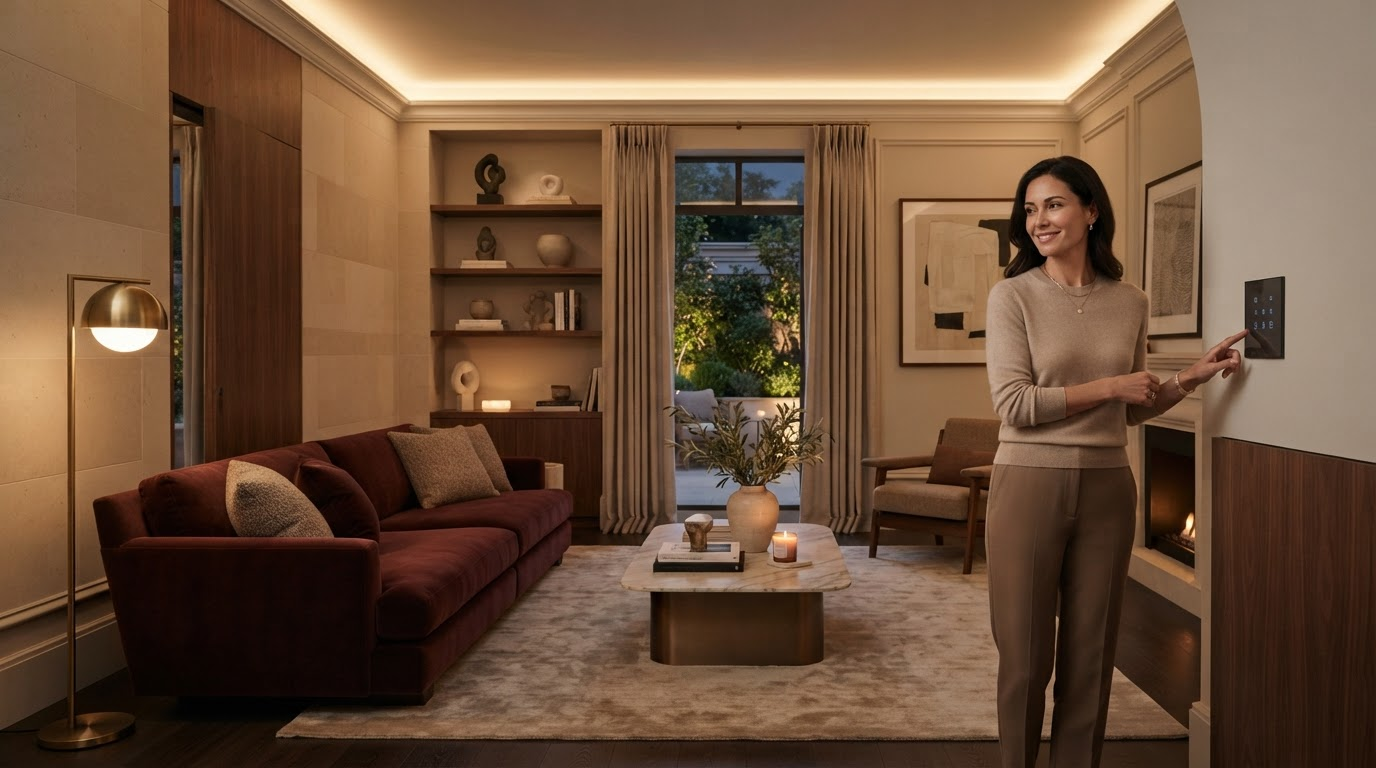
Smart homes are powerful, but they often become fragmented. One app controls the thermostat, another manages lights, another handles cameras, another manages locks, and another tracks energy use. An AI-powered digital assistant can unify these systems int...
Smart homes are powerful, but they often become fragmented. One app controls the thermostat, another manages lights, another handles cameras, another manages locks, and another tracks energy use. An AI-powered digital assistant can unify these systems into a more natural, automated experience.
Instead of manually adjusting devices, users can give the assistant goals: “Reduce energy use while I’m away,” “Prepare the house for guests,” “Make the home office comfortable by 8 AM,” or “Secure the house at night.” The AI agent can coordinate lighting, temperature, security settings, reminders, and routines based on time, occupancy, weather, and user preferences.
The real-world benefits are measurable. ENERGY STAR notes that smart thermostats can automatically adjust heating and cooling settings for better performance, with average savings of approximately 8% on heating and cooling bills or about USD 50 per year, depending on climate and household behavior. When connected to a reasoning-based assistant, these savings can become part of a broader home-efficiency strategy.
A private AI assistant adds convenience without forcing users to micromanage devices. It can detect patterns over time: when the user usually leaves, which rooms are used most, when energy demand peaks, and when security routines should activate. It can also send meaningful alerts rather than noisy notifications. For example: “The garage door has been open for 20 minutes after sunset,” or “Energy usage is unusually high while the house is empty.”
For busy professionals, this turns the home into a responsive environment. The assistant handles repetitive adjustments, improves comfort, and reduces wasted energy. The user spends less time managing devices and more time enjoying the benefits of automation.
Practical use case: A professional travels frequently. The AI assistant lowers heating and cooling while the home is empty, randomizes lights for occupancy simulation, checks door locks at night, alerts the user to unusual activity, and restores preferred settings before they return.